
We are quietly losing permanence. While ancient structures built hundreds of years ago still stand in all their glory, we are confronted with the reality that nothing produced in the last twenty years will survive until tomorrow. This superficial transience has already permeated not only architecture but our relationship with objects, spaces, and time itself. Instead of making a deep-rooted investment in the future, the new generation acts with the resignation of thinking, “it won’t last anyway.” The truth is, this feeling of rootlessness, where everything is stored in cloud systems and nothing is truly owned, is no longer foreign to any of us. It is the quietly echoing, shared malaise of the modern mind.

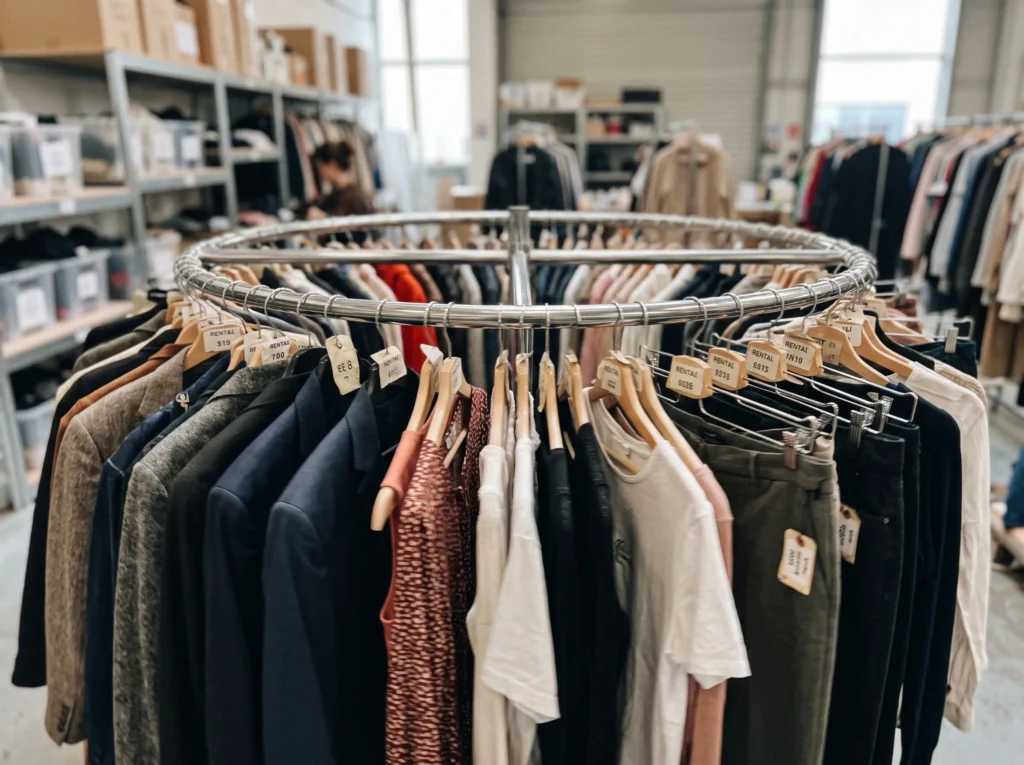
The desire for ownership has been replaced by a massive cycle of subscriptions. We rent the software we use, the films we watch, the houses we live in, and today, even the clothes in our closets. The fashion industry has transformed everyday wear into something akin to a digital platform subscription, forcing the following cycle onto the consumer: pay a fixed monthly fee, wear the garment for a few weeks, return it when the novelty wears off, and let someone else rent it in the same loop. This system is the ultimate extreme of consumption hysteria; it makes it impossible to build a personal style and reduces clothing to a public uniform.
The most tragicomic part is that giant retail chains present this rental system flawlessly masked as “environmentalism.” However, a prestigious study published in the journal Environmental Research Letters exposes the catastrophe created by this subscription illusion in all its nakedness. The exhaust emissions from delivery vehicles constantly shuttling back and forth, the massive packaging discarded every single time, and the heavy, chemical-laden dry cleaning processes required after each user push the carbon footprint of a rented garment to a level even more destructive than buying it and throwing it away. This spiral does not save the world; it merely provides a clean-looking cover, washed with “greenwashing,” for the sheer speed of consumption.

Transience Anxiety and Heirloom Modernism
Within this endless spiral of shuttling packages and dry cleaning, it is physically impossible for a person to forge a deep bond of ownership with an object. You cannot infuse soul into a rented garment, because that design has dozens of different bodies it will visit after you, dozens of different fabricated scenarios it will endure. Yet, the value of an object increases as it accumulates memories with you, bears witness to your life, and adapts uniquely to your body. In this dystopia where everything is fleeting, the weight of possessing a true masterpiece meant to be kept for generations has yielded to a hollow “accessibility.”
This state of uprooting creates a deeply felt transience anxiety in the modern individual. As design theorist Jonathan Chapman emphasizes in his thesis Emotionally Durable Design, the essence is to build an emotional legacy that will extend the lifespan of objects in our lives. In the past, the concept of an heirloom was defined only through heavy jewelry or carved walnut chests. However, the collapse of quality brought about by the industry has placed textile pieces that retain their form among the new generation of heirlooms. A garment does not merely cover the body; it archives the memories you lived within it, the scent of your skin, and your posture of that era right into its stitches.

This is exactly why, staying completely outside of rented lives and passing fads, being able to say “I truly own this” about a design that will defy time is the most noble choice of our day. Orlea’s production philosophy stands entirely outside this hypocritical circus of subscription cycles. An architectural design, knitted by a woman’s hands with millimeter-precision discipline using carefully selected yarns, is built not to be returned or rented, but to be passed down to your daughter. The strength we draw from the Clan Mothers elevates the object from a temporary consumption good to a permanent armor engraved in the visual history of a family, carrying on this heirloom wisdom.
Owning an object is not just handing over a credit card and buying it. Owning means taking responsibility for that creation, aging alongside it, and daring to make it an inseparable part of your own history. You cannot leave your existential mark on the world by constantly renting clothes worn by others and keeping pace with the weekly rotation of display windows. A mind secure in its own value does not wait in line in someone else’s rented closet; it creates a permanent archive as the Guardian of Time.
Will the design you wear today as an extension of your personal style maintain that same aesthetic weight and its original character when pulled from your closet twenty years from now? When we look back years later, will we have true witnesses with which we’ve gathered our memories, or merely rented illusions we slipped on for a few weeks and then returned in a cardboard box? Is your wardrobe a deep-rooted museum where your own history is preserved, or is it merely an ordinary transit lounge where clothes wait to be shipped off to others once you leave the room?
Further Reading:
- Chapman, Jonathan. Emotionally Durable Design.
- “The Future of Heirloom Fashion”. Fashion, Style & Popular Culture (Journal).
- “Environmental impact of clothing rental systems”. Environmental Research Letters.